
What is E-E-A-T and Why It Matters in SEO
In the ever-evolving world of search engine optimization (SEO), one concept has become increasingly important for website owners, marketers, and content creators: E-E-A-T. Introduced and emphasized by Google, E-E-A-T is not a direct ranking factor in the traditional sense, but it plays a critical role in how content quality is evaluated and how websites perform in search results.
If you want your website to rank higher, build credibility, and attract long-term organic traffic, understanding E-E-A-T is essential. This guide will break down what E-E-A-T means, why it matters, and how you can apply it effectively.
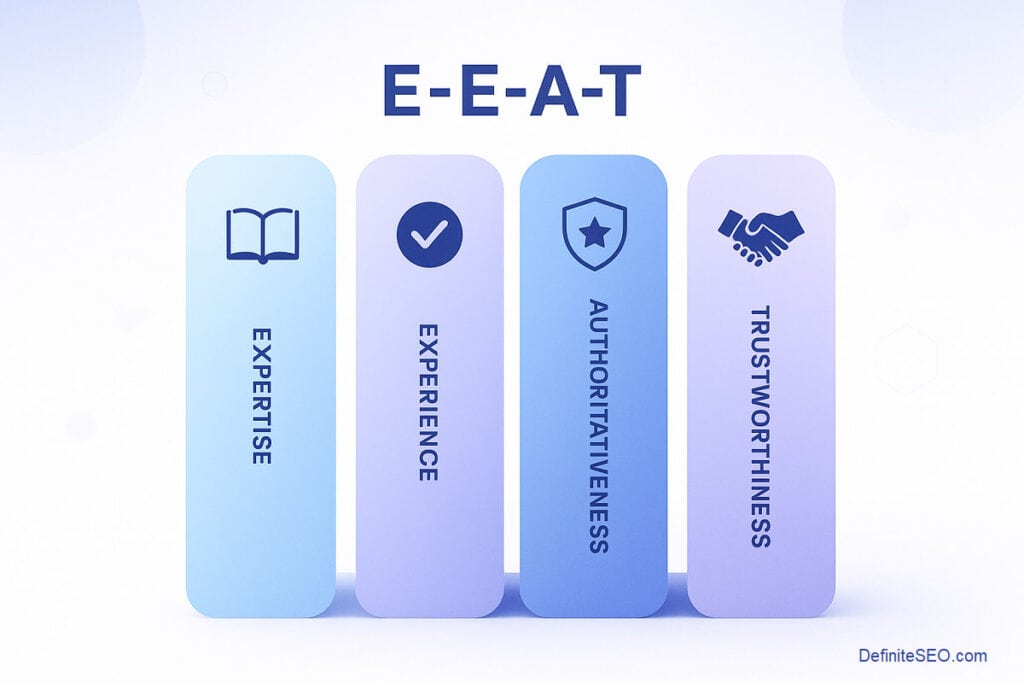
E-E-A-T stands for:
- Experience
- Expertise
- Authoritativeness
- Trustworthiness
This framework is defined in Google’s Search Quality Evaluator Guidelines, which is used by human quality raters to assess the value and reliability of web content.
Let’s break down each component in detail.
1. Experience
Experience refers to first-hand knowledge or real-life involvement with a topic.
📌 What it means:
Content should show that the creator has actually used, tested, or experienced what they are talking about.
✅ Examples:
- A product review written by someone who has actually used the product
- A travel blog based on personal travel experiences
- A case study based on real business results
❌ Poor example:
- Generic content rewritten from other blogs without any original insight
💡 Why it matters:
Google wants content that is authentic and useful, not just rewritten information. Real experience makes content more relatable and trustworthy.
2. Expertise
Expertise refers to the knowledge or skill level of the content creator in a specific field.
📌 What it means:
The author should have subject-matter knowledge or professional understanding of the topic.
✅ Examples:
- A finance article written by an MBA or financial advisor
- A medical article written by a doctor
- A digital marketing blog written by an SEO professional
❌ Poor example:
- Complex topics explained incorrectly or without depth
💡 Why it matters:
Users rely on accurate information. Expertise ensures the content is correct, valuable, and insightful.
3. Authoritativeness
Authoritativeness is about reputation and recognition.
📌 What it means:
Is the author or website considered a trusted authority in that niche?
✅ Signals of authority:
- Backlinks from well-known websites
- Mentions in reputable sources
- Strong brand presence
- Industry recognition
💡 Example:
A well-known website like Forbes has high authority because many trusted sources link to it.
❌ Poor example:
- A new website with no backlinks or credibility
💡 Why it matters:
Authority helps Google determine which source is most reliable when multiple sites cover the same topic.
4. Trustworthiness
Trust is the most important part of E-E-A-T.
📌 What it means:
Your website and content must be safe, accurate, and reliable.
✅ Trust signals:
- HTTPS (secure website)
- Clear contact information
- Privacy policy and terms
- Accurate and updated content
- No misleading claims
❌ Poor example:
- Fake information or clickbait content
- No author identity or transparency
💡 Why it matters:
If users cannot trust your content, nothing else matters. Trust is the foundation of SEO success.
🚨 What are YMYL Topics?
E-E-A-T becomes even more important for YMYL (Your Money or Your Life) topics.
📌 These include:
- Finance (investments, loans, crypto)
- Health and medical advice
- Legal information
- Safety-related topics
💡 Why Google is strict here:
Wrong information in these areas can harm people financially, physically, or emotionally.
Example:
- Investment advice must come from experts
- Health tips should be backed by medical knowledge
📈 Why E-E-A-T Matters for SEO
Now let’s understand why E-E-A-T is crucial for ranking and growth.
1. Improves Search Rankings
Even though E-E-A-T is not a direct ranking factor, it influences how Google evaluates content quality.
💡 Impact:
- High E-E-A-T = better ranking potential
- Low E-E-A-T = lower visibility
Google’s algorithms are designed to prioritize helpful and reliable content.
2. Builds User Trust and Engagement
When users trust your content, they:
- Spend more time on your site
- Read more pages
- Come back again
This improves metrics like:
- Bounce rate
- Dwell time
- Engagement
3. Protects Against Algorithm Updates
Google frequently updates its algorithms (core updates, helpful content updates).
💡 Reality:
Websites with weak E-E-A-T often lose rankings during updates.
Strong E-E-A-T helps:
- Maintain rankings
- Recover faster after updates
4. Increases Conversion Rates
Trust directly impacts business results.
Example:
- A trusted blog → more leads
- A credible website → more sales
Users are more likely to:
- Buy products
- Subscribe
- Contact you
5. Essential for Long-Term Growth
Short-term SEO tricks may work temporarily, but E-E-A-T ensures:
- Sustainable traffic
- Strong brand reputation
- Long-term authority
🧠 How Google Evaluates E-E-A-T
Google uses a combination of:
- AI algorithms
- Human evaluators
- Website signals
📌 Key evaluation factors:
- Content quality
- Author credibility
- Website reputation
- External references
🚀 How to Improve E-E-A-T (Practical Guide)
Here’s how you can apply E-E-A-T to your website.
1. Show Real Experience
- Share case studies
- Add personal insights
- Use real examples
- Include screenshots or results
Example:
Instead of saying “SEO increases traffic,” show:
- “I increased traffic by 120% using this strategy”
2. Build Expertise
- Write in-depth content
- Focus on your niche
- Avoid generic writing
- Use accurate data
Pro tip:
Specialization builds stronger expertise than writing about everything.
3. Add Author Information
- Create author bio pages
- Highlight qualifications
- Add social profiles
Example:
“Written by Pavan Kumar, MBA in Marketing, SEO Specialist”
4. Get High-Quality Backlinks
- Guest posting
- PR mentions
- Collaborations
Backlinks act as votes of confidence.
5. Improve Website Trust Signals
Make sure your site has:
- HTTPS security
- Contact page
- About page
- Privacy policy
These increase credibility.
6. Use Reliable Sources
- Link to trusted websites
- Cite data properly
- Avoid fake information
7. Keep Content Updated
- Refresh old blogs
- Update statistics
- Improve outdated sections
Google prefers fresh and relevant content.
8. Avoid Clickbait and Misleading Content
Don’t:
- Overpromise results
- Use fake claims
- Mislead users
This damages trust.
⚠️ Common E-E-A-T Mistakes
Many websites fail because of these errors:
❌ No author identity
❌ Thin content (low value)
❌ No real experience
❌ Copy-paste content
❌ Lack of credibility
❌ Poor website design
Fixing these can significantly improve performance.
📊 E-E-A-T vs Traditional SEO
| Traditional SEO | E-E-A-T SEO |
|---|---|
| Focus on keywords | Focus on content quality |
| Backlinks only | Trust + authority + experience |
| Short-term tactics | Long-term strategy |
| Ranking tricks | User-first approach |
🔮 Future of E-E-A-T
E-E-A-T will become even more important because:
1. Rise of AI Content
With tools like AI generating content, Google will prioritize human experience and authenticity.
2. More Focus on Trust
Misinformation is increasing, so trust signals will matter more.
3. Brand Authority Growth
Strong brands will dominate search rankings.
📝 Example: High vs Low E-E-A-T Content
High E-E-A-T:
- Detailed guide
- Real examples
- Expert author
- Trusted references
Low E-E-A-T:
- Generic content
- No author
- No sources
- Clickbait titles
📌 Quick Checklist for E-E-A-T
Before publishing any blog, check:
✔ Does it show real experience?
✔ Is the information accurate?
✔ Is the author credible?
✔ Are there trust signals on the site?
✔ Is the content helpful and original?
🧾 Conclusion
E-E-A-T is not just another SEO concept—it is the foundation of modern content strategy.
Search engines, especially Google, are moving toward a user-first approach, where quality, trust, and authenticity matter more than ever.
If your content:
- Demonstrates real experience
- Shows expertise
- Builds authority
- Establishes trust
…you will not only rank higher but also build a strong, sustainable online presence.